Turnpike Lane wedding flowers case study before and after
Posted on 11/10/2026
If you are looking at a Turnpike Lane wedding flowers case study before and after, you are probably trying to answer a very specific question: what actually changes when a wedding flower brief goes from the first conversation to the finished day? Fair question. The photos may look effortless, but there is usually a lot going on behind the scenes-colour matching, seasonal swaps, venue constraints, timing, delivery, installation, and those little fixes that stop the whole thing from feeling generic.
This article breaks down that process in a practical way. You will see why before-and-after comparisons are useful, how to interpret them, what good wedding floristry should include, and what to watch out for when planning flowers for a local wedding around Turnpike Lane and wider North London. There is also a realistic checklist, a comparison table, and an example-style case study so you can judge quality with a clearer eye. No fluff. Just the stuff that helps.
To keep things grounded, we will also point to a few relevant internal resources where it makes sense, such as the wedding flowers service for West Green N15 and the broader wedding collection, because planning flowers is easier when you can actually see the range of options.
Table of Contents
- Why Turnpike Lane wedding flowers case study before and after Matters
- How Turnpike Lane wedding flowers case study before and after Works
- Key Benefits and Practical Advantages
- Who This Is For and When It Makes Sense
- Step-by-Step Guidance
- Expert Tips for Better Results
- Common Mistakes to Avoid
- Tools, Resources and Recommendations
- Law, Compliance, Standards, or Best Practice
- Options, Methods, or Comparison Table
- Case Study or Real-World Example
- Practical Checklist
- Conclusion
- Frequently Asked Questions
Why Turnpike Lane wedding flowers case study before and after Matters
Before-and-after floristry case studies matter because they show the difference between a rough idea and a finished floral design. That sounds obvious, but in wedding planning it is surprisingly useful. A mood board can be dreamy. A bouquet sample can be pretty. Yet what really counts is how the flowers behave in the venue, in the light, on the day, and in the hands of the people carrying them.
For weddings near Turnpike Lane, this matters even more because venues and ceremony spaces can vary a lot. You might be dealing with a small reception room, a church setting, a restaurant space, or a modern venue that needs flowers to soften clean architectural lines. In other words, the same bouquet idea can look very different once it is scaled up, installed, and photographed. And let's face it, the photos are what most couples remember first when the day is over.
A good case study helps you see:
- how the original concept was interpreted
- what was adjusted for season, budget, or venue layout
- how colour and texture worked in real life
- whether the final design still felt personal rather than template-like
- how well the flowers supported the ceremony, aisle, tables, and portraits
That is why a proper before-and-after comparison can be more useful than a glossy gallery. It gives context. It shows judgement. And honestly, it gives you a much better sense of whether a florist can actually deliver what they promise.
Expert summary: A strong wedding flower case study is not just about prettier flowers. It shows how design choices solved practical problems, improved the venue, and kept the couple's style intact from first brief to final install.
How Turnpike Lane wedding flowers case study before and after Works
At its simplest, a wedding flowers case study compares the initial brief with the final result. The "before" is the starting point: colours, inspiration images, flower preferences, venue notes, budget and any non-negotiables. The "after" is the actual work delivered on the day: bouquets, buttonholes, ceremony arrangements, reception flowers, and any last-minute changes made to keep everything balanced.
The process usually follows a fairly familiar path, though the details vary from one wedding to another:
- Initial consultation - the couple shares style ideas, dates, colours, and venue details.
- Design development - the florist interprets the brief and suggests flowers that suit the season and budget.
- Proposal or quote - arrangements are refined, quantities are estimated, and practical delivery details are agreed.
- Preparation - stems are sourced, conditioned, and arranged close to the wedding date.
- Delivery and setup - bouquets, corsages, buttonholes, and venue flowers are delivered or installed.
- Final adjustments - stem lengths, placement, or styling are tweaked so everything reads well in the space.
In a Turnpike Lane wedding flowers case study before and after, the most useful part is often the middle ground. Not every design starts exactly as the couple imagined it, and that is normal. A florist may suggest a sturdier bloom for a summer ceremony, a softer palette for evening light, or a more compact table design if guest tables are tight. The best results come from those small professional edits. They are invisible when done well, which is sort of the point.
If you want to explore bouquet and arrangement styles while thinking through this process, the bridal bouquet collection and buttonhole options are useful starting points for seeing how the pieces work together.
Key Benefits and Practical Advantages
There are a few clear reasons people search for before-and-after wedding flower examples rather than just browsing product photos.
1. Better expectation-setting
A case study helps you understand what you are likely to get for a given brief. A simple white-and-green bouquet might sound plain on paper, but in the right hands it can look elegant, textural, and very tailored. The after image tells you how a florist handles proportion and detail.
2. Easier budget decisions
Florals are one of those wedding costs that can creep up if the brief is loose. A before-and-after example helps couples see where money goes: more stems, larger focal flowers, added table pieces, or upgraded ribbon and finishing. That makes budget conversations less awkward, which is helpful for everyone.
3. More confidence in style matching
If your wedding has a particular feel-classic, romantic, modern, seasonal, soft, dramatic, minimalist-you want flowers that support that tone rather than fight it. The case study format shows whether the florist can move from inspiration to execution without losing the original mood.
4. Useful for venue planning
Some venues need compact arrangements. Others can handle big, airy statement florals. Seeing before-and-after work makes it easier to judge scale. You can tell if the floral design fills the space without crowding it, which is a more common issue than people think.
5. Helps with seasonal realism
To be fair, not every flower is available every week of the year. A good before-and-after example shows how a florist works with the season instead of trying to force an unrealistic combination. That usually leads to better value and fresher flowers.
There is also a nice side benefit: when couples see real transformation, they feel less pressure to over-explain every detail. The florist can read the brief, make sensible calls, and the result feels calm rather than over-managed.
Who This Is For and When It Makes Sense
This kind of case study is especially helpful if you are in one of these situations:
- You are early in planning and need to understand what wedding flowers actually involve.
- You have a clear style in mind but are not sure how it translates into bouquets, centrepieces, and venue decor.
- You are comparing florists and want more than nice pictures.
- You are planning on a budget and need to see how design choices affect the final look.
- You want a local florist who understands delivery timing, access issues, and venue flow around Turnpike Lane.
It is also a good fit for couples who are doing their own research before speaking to a florist. There is nothing wrong with that. In fact, it usually leads to better conversations. You arrive with a few references, a sense of what you like, and a more realistic idea of what can be achieved.
Families helping with the planning often find these examples useful too. If a parent, sibling, or friend is trying to compare options, a before-and-after case study gives them something concrete to react to instead of a vague Pinterest board. Much easier.
Step-by-Step Guidance
Here is a simple way to approach a Turnpike Lane wedding flowers case study before and after, whether you are creating one, reviewing one, or using it to plan your own wedding.
Step 1: Define the brief clearly
Start with the basics: venue, date, dress style, colour palette, flower preferences, and budget range. If you skip this part, the rest gets wobbly. A brief that says "romantic but modern" is fine, but it becomes stronger when you add notes like "soft blush, cream, green, with a few richer accents" or "no heavy scent because of a small indoor space".
Step 2: Identify the key floral moments
Not every wedding needs the same level of coverage. Focus on the moments guests will notice most:
- bridal bouquet
- bridesmaid bouquets
- buttonholes and corsages
- ceremony flowers
- table arrangements
- top table or focal display
If the budget is tight, it is usually better to make a few pieces look excellent than to spread the flowers too thin. A stronger bouquet and a well-placed ceremony arrangement often do more visual work than lots of small, forgettable items.
Step 3: Match flowers to venue conditions
Light, temperature, and access matter. A bright room can carry bolder colour. A darker room may need lighter blooms to keep the scene from feeling heavy. If the venue has awkward set-up windows or narrow access, the designs should be practical as well as pretty. Quite a lot of wedding flower problems start with logistics, not taste.
Step 4: Choose flowers that behave well
Some flowers are naturally better suited to wedding work because they hold shape, travel well, or open nicely in the final hours before the ceremony. Others are more delicate and need extra care. Good floristry is partly about aesthetics and partly about knowing which stems will stay composed during the day.
Step 5: Review the design as a whole
A case study should not treat each piece separately. Look at the bouquet, buttonholes, and table pieces together. Do the colours repeat naturally? Does the scale make sense from the aisle to the dining room? Do the arrangements feel related, or like they came from three different events? A joined-up look is what makes the finished flowers feel polished.
Step 6: Check the after in real settings
The final image is only useful if it shows the flowers in the space. A bouquet on a plain backdrop is lovely, but a bouquet against a dress, a table setting, or a venue interior tells you much more. That is the real test. You want flowers that look right where the guests actually see them.
Expert Tips for Better Results
In our experience, the best wedding flower results come from a few practical habits rather than one big magical idea.
- Be specific about colour temperature. Warm ivory, clean white, blush, peach, dusty pink-they are not the same thing. Slight differences matter a lot in photos.
- Use one strong focal flower and support it with texture. That usually gives a richer look without making the design feel cluttered.
- Ask for seasonal substitutions up front. If a flower is unavailable, it is better to agree the style logic before the wedding week than to scramble at the last minute.
- Think about scent. Some venues and guests are fine with fragrant flowers, some are not. If the ceremony is intimate, strong scent can be a bit much.
- Keep the bouquet proportionate to the dress. A large gown can hold a fuller bouquet. A slim silhouette may look better with something lighter and more elegant.
- Photograph the flowers in daylight if you can. Even a quick phone photo near a window helps you judge whether the tone reads as intended.
A small but useful tip: ask to see how the arrangement looks from more than one angle. Flowers are not a flat object. They move, tilt, and breathe a little in the room. That is part of the charm, really.
If you are interested in more tailored designs, the wedding table arrangements and bridesmaid bouquets categories can help you compare scale and style before you decide.
Common Mistakes to Avoid
Wedding flowers are one of those areas where small mistakes become very visible on the day. Here are the usual culprits.
Overloading the brief
If you send too many inspiration pictures without saying what you actually like about them, the design can drift. One picture might be about colour, another about shape, another about ribbon. Mix them all together without direction and the result can get messy fast.
Ignoring venue scale
A dramatic centrepiece can look wonderful in one room and overwhelming in another. Always think in relation to table size, ceiling height, aisle width, and overall room density. Scale is one of the first things people notice, even if they cannot explain why.
Choosing flowers only by name
Some couples fall in love with a particular bloom and want it everywhere. Fair enough, but not all flowers suit every application. Some are better in bouquets than in table pieces. Some are fine as accents but not as the main event. A good florist will steer you gently here.
Forgetting the delivery window
Flowers are living things, not parcels you can leave till later. If the schedule is tight, the designs need to be planned around realistic setup time. A rushed install often looks rushed. No surprise there.
Underestimating finishing touches
Ribbon choice, vase shape, container finish, and stem length all affect the final look. These details seem minor on a screen, but in person they can change the entire tone from "nice" to "really well thought through".
Skipping the practical aftercare question
Once flowers are delivered, who moves them? Who waters them if needed? Which pieces can be repurposed after the ceremony? These are small questions, but they matter. And they are often forgotten until someone is standing by the top table at 11 p.m. wondering where the bouquets went.
Tools, Resources and Recommendations
You do not need a mountain of tools to plan good wedding flowers, but a few simple resources make the process smoother.
- Venue photos: useful for judging light, table spacing, and focal points.
- Colour swatches: helpful when matching flowers to dresses, tableware, or stationery.
- Guest count and table plan: important for estimating how many arrangements are actually needed.
- Inspiration images: best kept to a small, curated set with clear notes.
- Flower care guidance: especially useful if you want bouquets to stay fresh until the ceremony.
For practical planning, it helps to browse a florist's style range rather than just one hero product. The White Wonders wedding collection and Pure Romance wedding collection are good examples of how a style family can hold together across multiple pieces. If you are leaning toward something more structured and modern, look at the The Perfect Match wedding collection as a useful reference point.
And because life is life, keep one backup contact method ready. If a delivery note or final instruction changes on the day, a quick call is often better than a long email chain. Simple, but effective.
Law, Compliance, Standards, or Best Practice
Wedding floristry is not a heavily regulated industry in the way some trades are, but there are still important standards and best practices to follow. For couples and florists alike, these mostly come down to clarity, care, and professionalism.
In a UK setting, good practice usually includes:
- clear written agreement on the floral brief and what is included
- transparent pricing and payment terms
- realistic substitution wording if a flower is unavailable
- safe handling of stems, wires, pins, and packaging
- respect for venue rules on setup times, access, and waste removal
If fresh flowers are being transported, they should be handled in a way that protects freshness and avoids damage. If arrangements include pins or exposed wire, they should be secured properly, especially for buttonholes and corsages. Nothing glamorous about that bit, but it matters.
It is also sensible to ask how substitutions are managed. Seasonal availability can shift, and florists often have to make judgement calls close to the event. That is normal. What matters is that the final look still matches the agreed style. A professional florist will aim to protect the design intent, not just replace stems randomly and hope for the best.
For policy information, you can always review the site's own pages such as terms and conditions, delivery information, and guarantees so you know what to expect before placing an order.
Options, Methods, or Comparison Table
One of the easiest ways to think about wedding flowers is by method. Do you want a coordinated collection, a custom one-off design, or a mix of both? Each approach has strengths.
| Approach | Best for | Strengths | Watch-outs |
|---|---|---|---|
| Curated wedding collection | Couples who want a cohesive style quickly | Easy to compare, consistent look, less decision fatigue | Less bespoke unless adapted carefully |
| Custom wedding design | Couples with a specific vision or unusual venue | Highly tailored, flexible palette and scale | Needs clearer briefing and more back-and-forth |
| Mixed approach | Budgets that need focus but still want some personal detail | Good balance of control and simplicity | Requires careful editing so the final look stays consistent |
If you are unsure which route suits you, start with the curated route and see what feels close. That often gives you a clean visual language to work from. Then you can adjust the bridal bouquet, bridesmaid pieces, or centrepieces to make the design feel more personal. Sometimes the middle path is the best one. Not always, but quite often.
Some couples also compare classic whites, mixed spring tones, and richer romantic palettes. If that is you, have a look at wedding flowers in West Green N15 alongside themed ranges like SI wedding collection and Royal Essence wedding collection to see how different styles change the mood.
Case Study or Real-World Example
Here is a realistic example of how a Turnpike Lane wedding flowers case study before and after might read in practice.
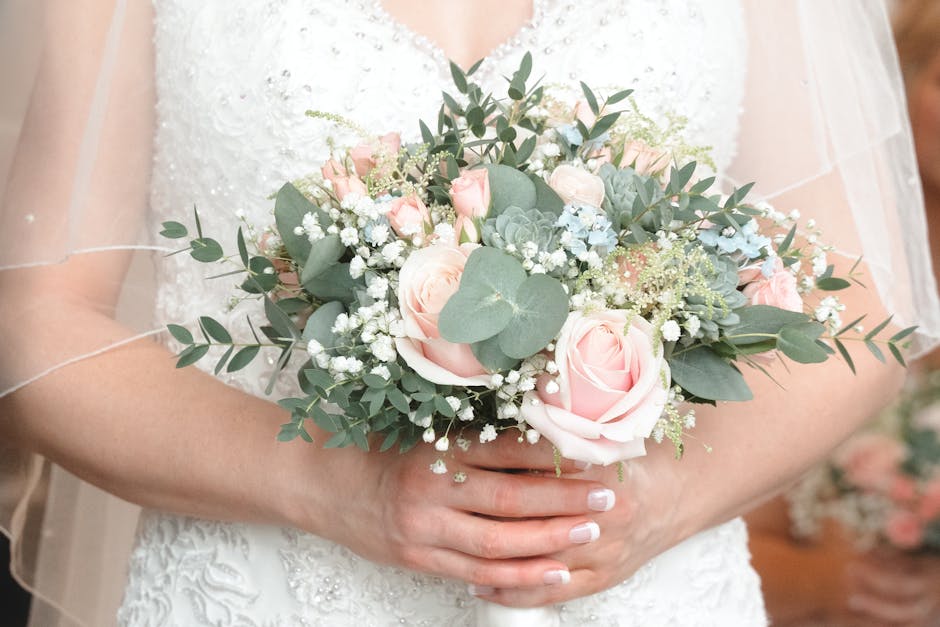
Before: The couple wanted soft romantic flowers with a modern finish. Their notes mentioned blush, ivory, light green, and "something elegant but not too formal." The venue was a compact North London reception space with limited room for large installations. They liked the idea of a bridal bouquet, two bridesmaid bouquets, buttonholes, and simple table arrangements.
Design considerations: The florist reviewed the room layout and suggested keeping the table flowers low so guests could talk across the tables without peering around stems. A fuller bouquet was kept for the bride, while the bridesmaid bouquets were slightly lighter and more open. Buttonholes were kept neat and balanced, so they would sit properly on jackets without drooping. Nothing overworked.
After: The finished flowers felt calm and cohesive. The bouquet had the right amount of movement, not stiff, not fluffy. The table arrangements echoed the bouquet palette without repeating the exact same flower in every piece, which made the room feel designed rather than copied. In photos, the blush tones picked up the skin tones nicely, while the greens added freshness and depth. The overall effect was warmer and more polished than the couple had originally pictured, which is usually a good sign.
What changed from before to after?
- the palette stayed the same, but the proportions were refined
- the tables were scaled down for practicality
- the bouquet gained more texture for visual interest
- the final look felt more joined-up across the venue
That is the heart of a good case study. The point is not that the design became completely different. The point is that it became better suited to the real event. A small shift, maybe. But a meaningful one.
Practical Checklist
Use this checklist if you are planning your own wedding flowers or reviewing a florist proposal.
- Have you confirmed the venue, date, and setup window?
- Do you know which floral pieces are essential and which are optional?
- Have you chosen a colour palette with at least one main tone and one support tone?
- Have you checked seasonal availability for your preferred flowers?
- Does the florist know your budget range?
- Have you shared dress, suit, or stationery details where relevant?
- Have you asked how substitutions are handled?
- Have you seen examples of similar scale or style work?
- Have you thought about after-ceremony repurposing of arrangements?
- Do you know who is receiving the flowers on the day?
Quick rule of thumb: if the plan only looks good on paper, keep refining it. If it looks good on paper and also makes sense in the room, you are nearly there.
Conclusion
A thoughtful Turnpike Lane wedding flowers case study before and after is more than a pretty comparison. It is a practical tool for understanding what good wedding floristry looks like in real life: how a brief becomes a design, how a design adapts to a venue, and how the final flowers create the feeling people remember.
For couples, the value is reassurance. For planners and families, it is clarity. For anyone comparing florists, it is one of the best ways to spot genuine skill rather than just attractive photographs. If you take anything from this guide, let it be this: the strongest wedding flowers are rarely the loudest. They are the ones that quietly make everything else look right.
Get a free quote today and see how much you can save.
And if you are still narrowing things down, keep it simple: choose flowers that fit the room, the season, and the mood of the day. That usually gets you a long way. Sometimes further than you think.
Frequently Asked Questions
What does a Turnpike Lane wedding flowers case study before and after actually show?
It shows the journey from the initial floral brief to the finished wedding flowers on the day. That includes design choices, flower selection, scale, and any adjustments made for the venue or season.
Why is before-and-after content useful for wedding flowers?
Because it helps you see how an idea translates into a real arrangement. It is much easier to judge quality, styling, and practicality when you can compare the starting point with the final result.
Can a florist change the original design if certain flowers are unavailable?
Yes, and that is normal. Good florists will suggest suitable substitutions that keep the overall style, colour palette, and balance intact rather than replacing stems randomly.
How far in advance should I plan wedding flowers?
As early as you reasonably can. The exact timing depends on your wedding date, the complexity of the design, and how specific your flower preferences are. Early planning usually gives more flexibility.
What flowers work well for a local London wedding venue?
That depends on the venue light, season, and style. Generally, flowers that travel well and hold shape are a strong choice for bouquets, buttonholes, and table flowers.
How do I keep wedding flowers within budget?
Focus on the pieces guests will notice most, like the bouquet and key ceremony flowers. Keep the design cohesive, and avoid spreading the budget too thin across lots of small items.
Are same-day changes possible for wedding flowers?
Sometimes, but it depends on the florist's schedule and the type of change needed. It is usually better to finalise details before the wedding day so the team can prepare properly.
What should I look for in a good wedding flower example?
Look for clear styling, sensible proportion, a matching colour story, and flowers that actually suit the venue. If the flowers look good in the room, not just in isolation, that is a strong sign.
Do I need matching flowers for bridesmaids and buttonholes?
They do not need to match exactly, but they should feel connected. A shared palette or repeated accent flower is usually enough to create a coordinated look.
What is the biggest mistake couples make with wedding flowers?
Probably giving too many vague ideas without clear priorities. A better approach is to decide what matters most visually, then let the florist build around that.
Can I reuse ceremony flowers at the reception?
Often yes, and it is a smart way to get more value from the flowers you have already ordered. Ask the florist or venue team how repurposing can work safely and smoothly.
How do I know if a florist understands my style?
Look at their examples and see whether they consistently deliver the kind of mood you want. A good florist should be able to explain how they would adapt your ideas into something that works in real life.